

Equity, Diversity, and Inclusion
Commitment to Equity, Diversity and Inclusion
We are committed to cultivating a culture of equity, diversity, inclusion, and accessibility. We acknowledge and deeply respect the individual differences, lived experiences, expertise, and knowledge of those within our cluster. We welcome all contributions regardless of age, gender identity or sexual orientation, physical ability, race, religion, ancestry, or culture.
While most organizations have a language and process in place to embrace diversity and be more inclusive, effectively developing and implementing an equity, diversity, and inclusion (EDI) strategy that is truly operational—and not tokenistic—requires more than good intentions. We aim to develop and implement an effective plan by exploring courses and programs that focus on unity, cohesion, and mutual support, and create fair, equitable, and inclusive communities and workplaces.
Required EDI training for ImmunoE Members: EDI Foundations
EDI Committee
Purpose
The Equity, Diversity, and Inclusion (EDI) Committee of the Immunoengineering NSERC CREATE is established to advance a culture of inclusion, equity, and respect across all aspects of cluster activities—including research, training, mentorship, and knowledge translation. The Committee will work to ensure that the development and application of immunotherapies reflect and serve the diversity of our communities, and that participation in the cluster is equitable and inclusive for members of historically underrepresented groups.
Objectives
- Promote inclusive research practices that consider sex, gender, race, ethnicity, disability, socioeconomic status, and other dimensions of diversity in immunotherapeutics development.
- Support equitable access to training, leadership, and funding opportunities within the cluster.
- Provide recommendations to the cluster leadership on policies, practices, and strategic plans that support equity and inclusion.
- Organize and/or promote EDI education, workshops, and events relevant to immunoengineering research and clinical translation.
- Collaborate with institutional EDI offices and other clusters to align efforts and share resources.
- Monitor and evaluate EDI metrics (e.g., membership diversity, trainee outcomes, leadership composition) and make evidence-informed recommendations.
Upcoming EDI Events in the Community 2026
September 21
9:00 AM - 4:00 PM
Please join us for this in-person, all-day event on Monday, September 21, 2026, from 9:00 am to 4:00 pm at Jack Poole Hall on the UBC Vancouver campus.
This Indigenous Speakers Series session features Dr. Evan Tlesla Adams and Mr. Joe Gallagher, members of the Tla’amin Nation. Dr. Adams is the Deputy Chief Medical Officer, Public Health at the First Nations Health Authority and host of the docuseries The Conversation. Mr. Gallagher is the Vice President, Indigenous Health and Cultural Safety at the Provincial Health Services Authority.
Learn about their journeys in storytelling, medicine, and health-system transformation, and how these experiences have shaped their vision for thriving Indigenous futures.
Monthly
We welcome you to attend one of CTLT Indigenous Initiatives’ monthly Virtual Coffee Hours. They are an informal space to connect with consultants on the team and other colleagues across the university. We are always excited to hear about a project you are working on or a new resource you found, peer-to-peer sharing is highly encouraged. Please come if you have questions or are just looking to say hello!
Past EDI Events
2026
June 17
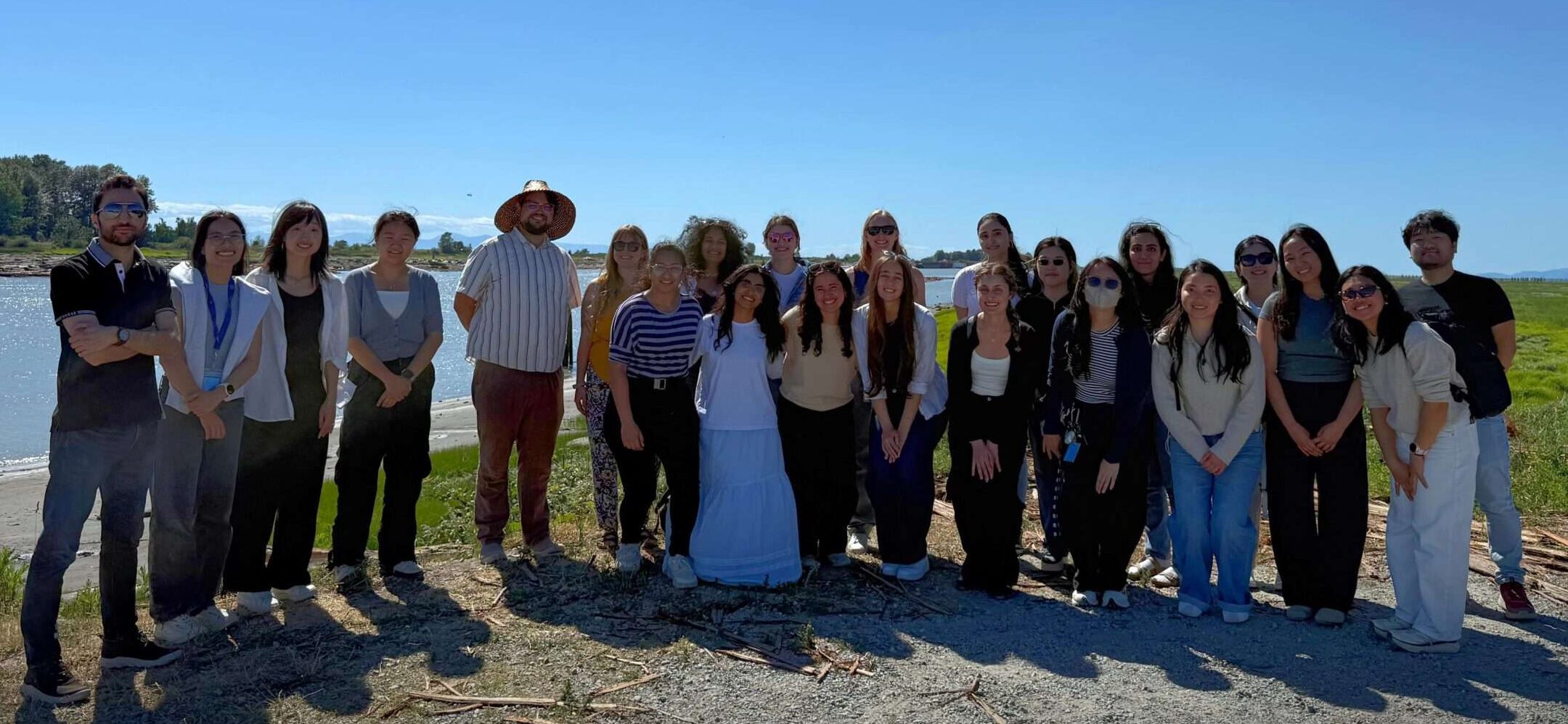
On June 17, the ImmunoE trainees spent an afternoon at the Musqueam Cultural Centre, gaining a deeper understanding of Musqueam history and culture as part of the program's ongoing commitment to Indigenous cultural learning and reconciliation.
The tour offered trainees insights into the architecture and symbolism of the Longhouse, the significance of the Fraser River to Musqueam life, and the family and community connections sustained across generations through marriage, travel, and cultural work.
In a follow-up survey, attendees highlighted learning about cultural protocols, which included the spiritual significance of masks and the care behind naming practices. Attendees also learned about the role of longhouses in telling family stories, with house posts and moveable roofs reflecting kinship ties.
For many, the visit marked their first experience at an Indigenous cultural site, coming away with a new appreciation for storytelling as a method of preserving laws, genealogies, and knowledge. After the tour, many feel more motivated to continue learning from and engaging respectfully
with Indigenous communities.
2025
May 15
This self-guided tour offered an opportunity for students, staff and faculty to reflect on the history and legacy of residential schools and engage in meaningful dialogue. Through this tour, participants learned the stories of survivors and communities/families affected by residential schools and engage in the reconciliation efforts today in our community.
March 27
This workshop, given by students and staff of the MBIM EDI Committee highlighted how we can provide a more inclusive space for neurodivergent people in academia. Through an interactive workshop, the committee worked with participants to brainstorm and suggest strategies to improve accessibility for neurodivergent trainees, creating a space where everyone can thrive in their education.
2024
November 20
Interactive seminar given by Dr. Annie Ciernia highlighting the advances and shortcomings of equity in academic settings, including here at UBC. This workshop provided insight on where the current EDI initiatives at UBC are improving inclusivity in the academic space, and where we are still falling short on making this a welcoming space for all people, with emphasis on what more needs to be done moving forward.
Resources links
UBC Initiatives, events, and offices
- UBC GPS EDI office
- Faculty of Medice EDI Page
- UBC REDI
- UBC Interest Group
- Initiatives at the Beaty Museum
- UBC Farm Wellness Events
- UBC Indigenous Strategic Plan
- UBC Indigenous Portal
- Equity and Inclusion Office
- FoM equity office
- Sexual Violence Prevention and Response Office (SVPRO)
- Green Folder - Helping students in distress (guide for faculty and staff)
- Teal Folder - Supporting survivors of sexual violence
Student resources:
- Mental health care coverage
- Professional development for women grads and PDFs
- Office of Ombudsperson for Students
Other resources:
- BC Museum EDI resources
- Botany Harassment and Discrimination Flow Chart
- Launchpad Program for UG research for Indigenous students in Physics and Astronomy
- Code of Conduct for Institute for the Oceans and Fisheries
- UBC Days of significance
- Religious accommodations
- Comprehensive Calendar of religious and cultural and commemorative days (shared by UBC EIO)


Contact Information
General Inquiries:
immuno.therapeutics@ubc.ca
ImmunoE NSERC CREATE Program: immunoengineering.create@ubc.ca
6088 University Boulevard, Vancouver, BC V6T 1Z3



© Copyright 2025 by ImmunoT & ImmunoE